

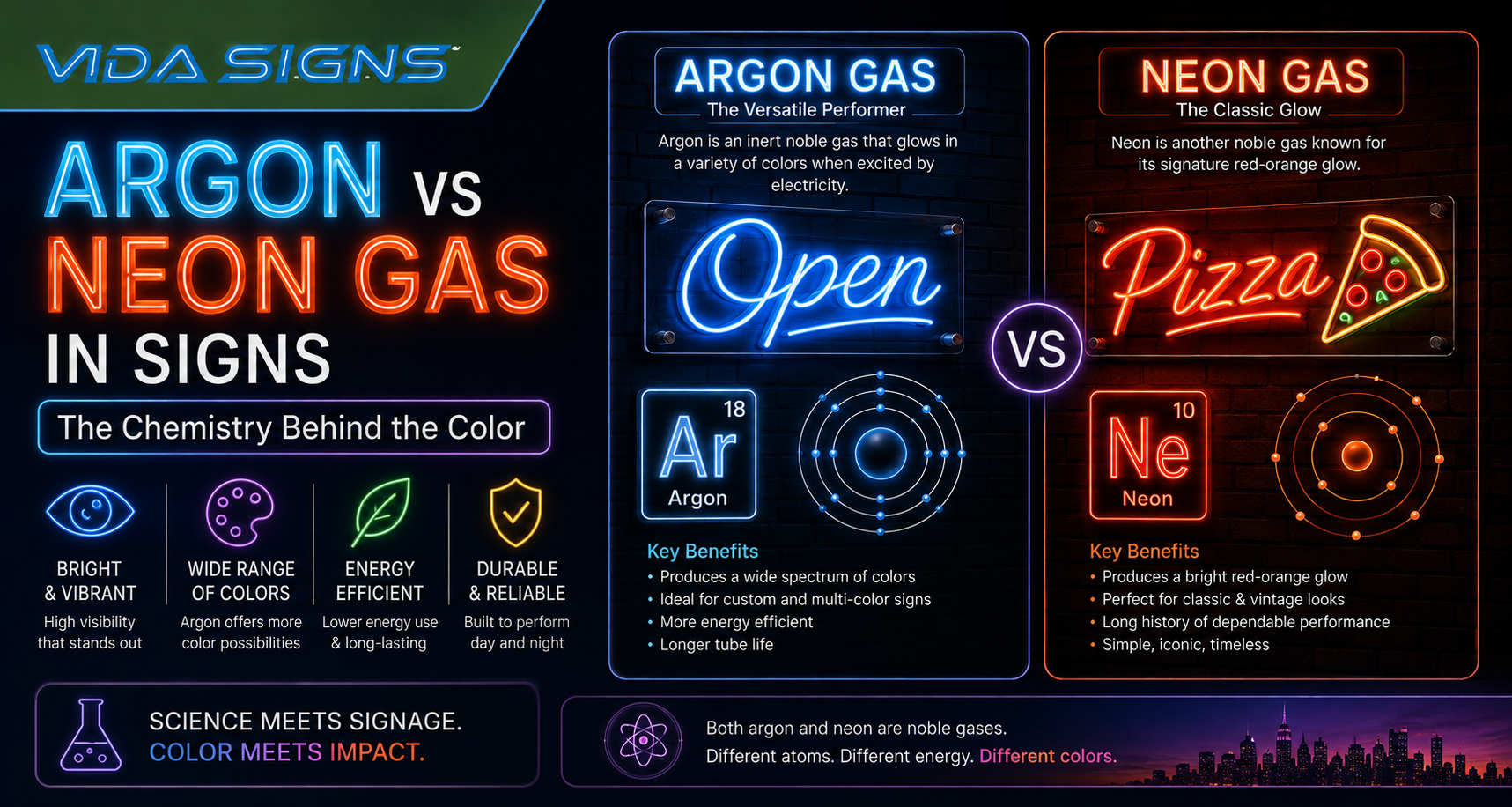
Argon vs Neon Gas in Signs: The Chemistry Behind the Color
01 AugPeople often use the term “neon sign” to describe almost any glowing sign they see in a storefront or window. It has become a catch-all phrase, even though many illuminated signs do not actually contain neon gas at all. That little detail surprises a lot of people.
The truth is that different gases create different colors, brightness levels, and effects. Understanding the difference between neon gas vs argon can help businesses, designers, and anyone interested in signage make better choices.
This article explains what gases are used in traditional neon signs in NY, how they produce different colors, and whether neon or argon is the better choice for your sign.
What Is a Neon Sign?
A neon sign is a glass tube filled with a small amount of gas. When electricity passes through the tube, the gas becomes excited and emits light. The color of that light depends largely on the type of gas inside the tube and sometimes on the color of the glass itself.
Traditional neon signs have been around for more than a century. Despite advances in lighting technology, they still have a charm that is difficult to replace. There is something about the soft glow of real gas-filled signs that feels warm and authentic.
What Gas Is in Neon Signs?
Many people ask, “what gas is in neon signs?” The answer is not as straightforward as most expect.
Different gases are used depending on the desired color and performance characteristics.
Pure Neon Gas
Pure neon gas produces the iconic reddish-orange glow that most people associate with classic signs.
If someone asks what gas is in neon signs, and they are referring to the traditional orange-red sign seen in old diners or theater marquees, the answer is neon.
Neon is one of the noble gases on the periodic table. It is colorless and odorless under normal conditions, but once electricity passes through it, it glows with remarkable intensity.
Argon Gas
Argon is another noble gas frequently used in illuminated signage. Unlike neon, argon produces a pale lavender color by itself. However, it is usually combined with a small amount of mercury to create a bright blue appearance.
The typical argon sign color that people recognize is actually a vivid blue produced by this combination.
Argon also requires less operating voltage than pure neon, which can make it a practical choice for certain applications.
Argon with Mercury Vapor
Many blue signs are created using argon and a tiny amount of mercury vapor.
These are often called mercury vapor signs because the mercury reacts with electrical energy to produce ultraviolet light. That ultraviolet light then creates the brilliant blue glow seen in many signs.
Although the term mercury vapor signs sounds complicated, the process is fairly simple from a scientific perspective.
Because of this combination, the familiar blue argon sign color has become one of the most recognizable shades in traditional signage.
Other Noble Gases Used in Signage
Besides neon and argon, other gases can also be used in illuminated signs. Helium, krypton, and xenon occasionally appear in specialty applications.
These gases belong to the family of noble gas signs, where each gas contributes unique lighting characteristics.
Some designers enjoy experimenting with noble gas signs because the possibilities for color and visual effects are surprisingly broad.
The Science Behind Neon Color Chemistry
The fascinating thing about glowing signs is that the colors come directly from atomic behavior.
This process, often called neon color chemistry, happens when electricity excites gas atoms. The atoms absorb energy and then release it as visible light.
Different gases release different wavelengths of light, which is why neon glows red while argon produces blue.
The science behind neon color chemistry is actually one of the reasons traditional signs remain so interesting. There is real physics happening inside every tube.
Neon Gas vs Argon: What’s the Difference?
Understanding neon gas vs argon becomes easier when the two are compared side by side.
| Feature | Neon Gas | Argon Gas |
|---|---|---|
| Light Color | Red-orange | Blue when mixed with mercury |
| Brightness | Very bright and warm | Bright but cooler appearance |
| Operating Voltage | Higher voltage required | Lower voltage required |
| Temperature Performance | Performs well in cold weather | Less ideal in very cold environments |
| Cost Considerations | Generally more expensive | Usually more affordable |
Light Color
The biggest difference in neon gas vs argon is the color.
Neon creates a warm red-orange glow that immediately feels nostalgic. Argon, especially when combined with mercury, produces bright blue illumination.
Brightness
Both gases are bright, but the visual effect differs.
Neon tends to appear softer and warmer. Argon can look sharper and more intense, particularly in darker environments.
Operating Voltage
Another important point in neon gas vs argon is electrical requirements.
Neon requires higher operating voltage, while argon typically functions at lower voltage levels.
Temperature Performance
Pure neon generally performs better in colder conditions.
Argon-based signs can occasionally take longer to reach full brightness in lower temperatures. It is a small detail, perhaps, but one that matters in certain climates.
Cost Considerations
Argon is often considered a more economical option because it requires less electrical energy and the gas itself is abundant.
Still, many businesses happily pay a bit more for the classic appearance of genuine neon.
How Glass Color Changes the Final Appearance
Gas is not the only factor that determines a sign’s color.
Colored glass tubing can dramatically alter the final effect. For example, white phosphor coatings inside glass tubes can transform ultraviolet light into entirely different shades.
This is why asking what gas is in neon signs sometimes leads to a surprisingly long answer. The final color depends on gas, glass coatings, and tube design working together.
Neon vs Argon: Which Is Better?
The answer depends on the goal.
If you want a traditional, warm glow with vintage appeal, neon is difficult to beat. Restaurants, bars, and classic storefronts often choose neon because it feels timeless.
If you need blue illumination or are looking for a more cost-effective option, argon may be the better choice.
At the end of the day, neon gas vs argon is not really about one gas being universally better than the other. They simply serve different purposes.
For businesses seeking professionally crafted Neon Signs NY, understanding these differences can help create signage that perfectly matches their brand identity.
Common Myths About Neon and Argon Signs
Myth 1: Every glowing sign contains neon gas
This is false. Many signs actually use argon and mercury.
Myth 2: Argon signs are lower quality
Not true at all. Argon signs can be exceptionally bright and durable.
Myth 3: Neon can produce every color on its own
Neon naturally produces only red-orange light. Other colors require additional techniques.
Myth 4: Gas-filled signs are outdated
Interestingly, traditional signs are still highly valued. Their handcrafted appearance offers something digital displays often cannot replicate.
Businesses looking for personalized branding frequently invest in custom neon signs because of their artistic and nostalgic appeal.
Bottom Line
The debate around neon gas vs argon is really a conversation about color, performance, and design goals.
Neon delivers the iconic red-orange glow that people have loved for decades. Argon, particularly when combined with mercury, creates beautiful blue illumination and often operates more efficiently.
Understanding what gas is in neon signs helps you appreciate the craftsmanship and science behind these displays. Whether you choose neon or argon, both gases continue to play an important role in modern signage.
At Vida Sign, we believe the right sign is about more than lighting. It is about creating an experience that people remember.
Looking for a Custom Sign Solution?
At Vida Sign, we design and manufacture high-quality neon and illuminated signs tailored to your business needs. Whether you prefer the warm glow of classic neon or the vibrant blue of argon-filled displays, our team can help bring your vision to life. Contact us today at (212) 388-9388 or visit https://vidasigns.com/ to discuss your next signage project and discover the perfect lighting solution for your brand.
Frequently Asked Questions
What gas is inside a neon sign?
The answer depends on the sign. Pure neon produces red-orange light, while many blue signs contain argon and mercury.
What is the difference between neon gas and argon gas?
The main differences involve color, operating voltage, and performance characteristics.
Why does argon produce blue light?
Argon combined with mercury creates ultraviolet light that produces a bright blue appearance.
What are mercury vapor signs?
These are signs that use argon and mercury to create vivid blue illumination.
Can neon gas create different colors?
Not by itself. Pure neon naturally emits red-orange light.
Which gas lasts longer in neon signs?
Both gases can last for many years when signs are properly manufactured and maintained.
Are modern LED neon signs filled with gas?
No. LED neon signs use flexible light-emitting diodes instead of gas-filled tubes.
Which is better: neon gas or argon for signage?
Neither is universally better. The right choice depends on the desired color, budget, and design objective.
