

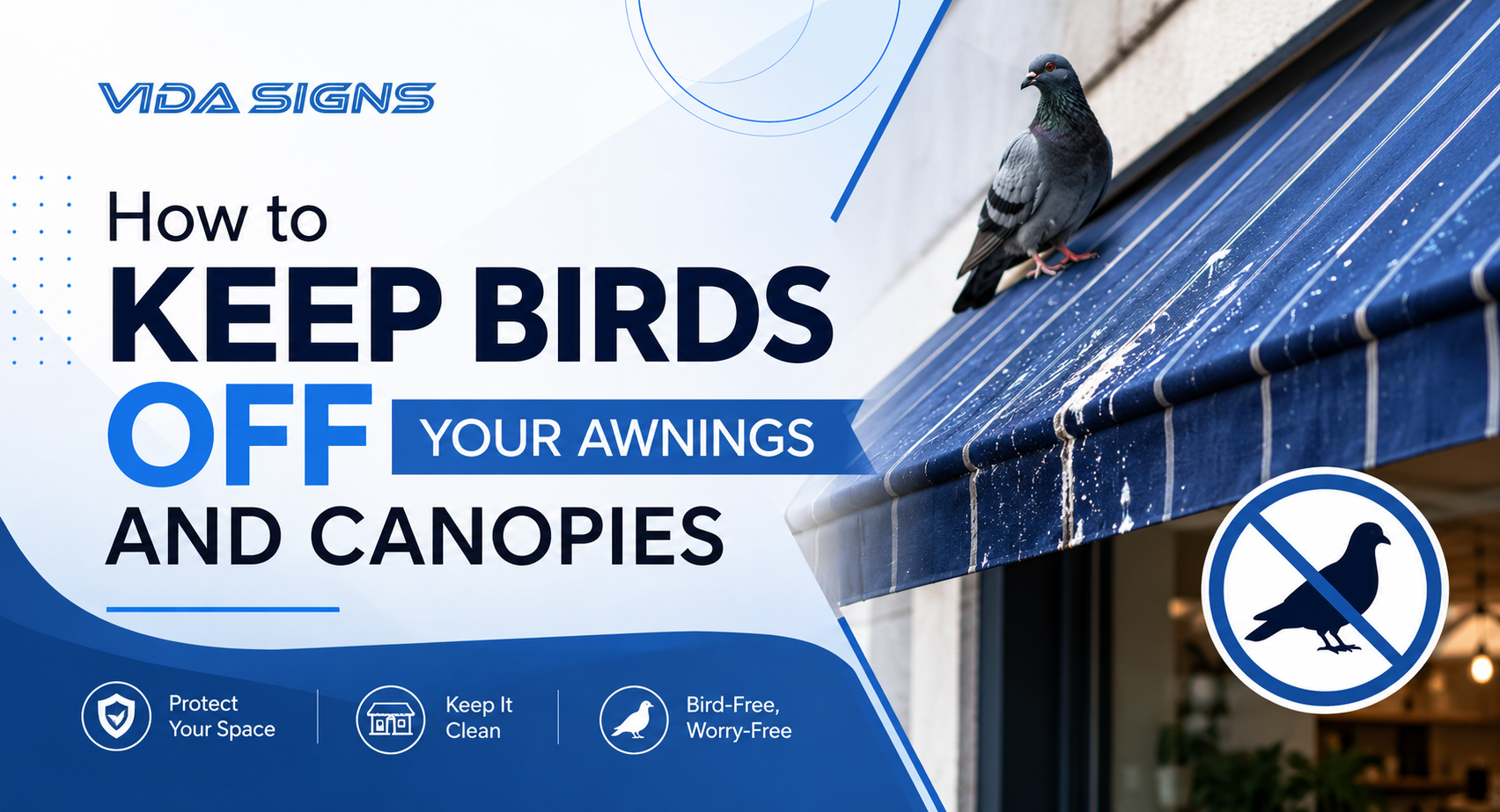
How to Keep Birds Off Your Awnings and Canopies: 8 Quick Tips
03 MayStorefront awnings give your place of business a distinguished presence. They protect against the elements, enhance curb appeal, and boost brand visibility. But unfortunately, in NYC, birds nesting in your outdoor awnings have become a serious concern.
It starts small: some chirping, maybe a feather or two. Harmless. But then you start seeing signs of nesting: droppings in the same spot every morning, bits of twigs collecting in corners, and the telltale rustle of wings hidden up in the folds. Suddenly, it becomes something you can’t ignore.
This article walks you through why birds are drawn to outdoor awnings, the problems they create, and practical, realistic ways to keep them away.
Why Birds Love Awnings (More Than You’d Expect)
Awnings offer a near-perfect combination of shelter and elevation. They’re protected from wind and rain, tucked away from predators, and often close to food sources, especially in urban areas.
Different species have different preferences, but many gravitate toward ledges, folds, and corners. The structure of outdoor awnings creates these little pockets that feel safe. Add a bit of warmth from sunlight and nearby human activity (which oddly deters some predators), and you’ve got a prime nesting spot.
Once nesting in your outdoor awnings begins, birds tend to return. Not always immediately, but often enough that it becomes a recurring issue.
The Real Problems Birds Cause on Awnings
It’s easy to underestimate the impact at first. A few droppings don’t seem like a big deal. But it builds.
Mess and Stains
Bird droppings are acidic. Left alone, they stain fabric, discolor metal, and leave behind marks that don’t quite come off, even after cleaning. Over time, the awning starts to look neglected, even if it isn’t.
Health Risks
There’s a more serious side to this. Bird droppings can carry bacteria and fungi that pose health risks, especially in areas with heavy foot traffic. It’s not something most people think about when they glance up at an awning, but it’s there.
Structural Wear and Tear
Nesting materials, like twigs, leaves, and debris, can clog drainage paths or weigh down certain sections. It’s subtle at first. Then one day, you notice sagging or water pooling where it shouldn’t.
Negative Business Impression
Imagine you’ve paid a sign company in NYC to install a new awning for your small bakery. Customers will be more likely to visit as they are attracted to your gleaming storefront. But similarly, a stained or debris-covered awning gives the impression of neglect and lack of upkeep, which can make customers hesitate to approach your store.
8 Practical Ways to Keep Birds Away From Awnings
There’s no single perfect solution. Most of the time, it’s a mix of small strategies that work together.
Install Bird Spikes Where They Roost
Bird spikes sound aggressive, but they’re actually harmless. They simply make it uncomfortable for birds to land. Install them along ledges and edges where birds tend to gather. It’s a straightforward fix that works surprisingly well.
Use Smell-Based Deterrents
Some birds are sensitive to certain odors. Natural repellents, such as vinegar-based sprays or commercially available bird gels, can make areas less appealing to birds. It’s not foolproof, but it adds another layer of deterrence.
Keep the Surroundings Clean
This one’s easy to overlook. If your yard or surrounding area has food scraps, open bins, or standing water, birds will keep coming back. Clean surroundings reduce the incentive. It’s not glamorous, but it’s effective.
Hang Reflective Objects
Shiny, moving objects, like reflective tape or small metallic discs, can confuse and deter birds. The light shifts unpredictably, which birds don’t love. It’s a bit old-school, but still useful.
Avoid Feeding Birds Nearby
It sounds obvious, but it happens. Even unintentionally. Once birds associate your space with food, they’ll stick around. And eventually, nesting in your outdoor awnings follows.
Install Motion-Activated Devices
Lights and sprinklers that activate when movement is detected can startle birds enough to keep them away. It’s not subtle, but it doesn’t need to be. The unpredictability is the point.
Remove Nests Promptly
If you spot early nesting activity, like the presence of twigs, leaves, or partial structures, remove them before they’re established. Timing matters here. Once nesting in your outdoor awnings is complete, removal becomes more complicated, sometimes even restricted, depending on local wildlife regulations.
Relocate Nests When Necessary
When a nest is already established, relocation might be the only option. This should be done carefully and, ideally, with professional guidance. It’s not always as simple as moving it a few feet away.
Bird Repellent Products: What’s Worth Trying?
There’s a wide range of products out there. Some work better than others.
Bird spikes and netting: Reliable for physical exclusion.
- Repellent gels: Create surfaces birds avoid landing on.
- Ultrasonic devices: Mixed results. Some people swear by them, others see little change.
- Decoy predators: Sometimes effective, though birds can get used to them over time.
It’s a bit of trial and error. What works in one setting might not work in another. Still, combining a few methods tends to yield better results than relying on a single method.
Smarter (and Slightly Unexpected) Ways to Scare Birds Off
Sometimes, it’s not about blocking access but making the space feel unpredictable.
Visual Deterrents
Predator silhouettes, reflective materials, and even strategically placed signage can disrupt bird behavior. The key is movement or change. Static objects lose effectiveness over time.
Physical Barriers
Netting or angled surfaces can prevent birds from settling in the first place. It’s less about scaring them and more about removing the option entirely.
Noise-Based Solutions
Sound deterrents, such as recorded predator calls, can work, but they need to be used carefully. Too much noise can become a nuisance for people, not just birds.
Making Awnings Less Appealing for Nesting
If you think about it, birds aren’t trying to be a problem. They’re just looking for a safe place. So, the goal is to make your awning feel less safe. Or at least less comfortable.
Seal gaps where nesting materials can collect. Adjust angles if possible. Keep surfaces clean and free of debris. Carry out regular inspections; catching early signs of nesting in your outdoor awnings makes everything easier.
This is where a few good awning maintenance tips come into play. Not just for birds, but for longevity overall. Clean fabric, intact frames, proper drainage, it all adds up.
A Note for Businesses and Commercial Spaces
For businesses, especially those that rely on visual branding, awnings are part of the presentation. They’re more than just functional; they’re part of how customers perceive the space.
And like with signs in NYC, awnings too require consistent upkeep. Taking proactive steps to deter bird activity keeps things looking intentional rather than reactive. It’s a small detail, but customers tend to notice small details more than expected.
Final Thoughts
Keeping birds away from awnings isn’t about one perfect fix. It’s more about layering small, practical strategies until the space becomes less attractive for them.
Some methods will work immediately. Others take time. The goal isn’t a sterile bubble; it is to stop the daily mess and prevent any long-term damage. The key is consistency. And maybe a bit of patience.
Get a Quote From Vida Signs
If your awnings are showing signs of wear, or bird activity is becoming harder to manage, Vida Signs is here to offer practical, effective solutions to businesses across NYC. Whether you need custom-fitted bird spikes, new tension fabrics, or a complete awning replacement, our team will help upgrade your awnings with durability and design in mind.
Reach out to us at (212)-388-9388 for a tailored quote today.
Frequently Asked Questions
What is the best way to keep birds off awnings?
A combination of physical barriers (like spikes or netting) and deterrents (visual or motion-based) works best. There’s rarely a single solution that covers everything.
Do bird deterrents really work?
Yes, but effectiveness varies. Most work better when used together rather than individually.
How do I stop birds from nesting in my canopy?
Start early. Remove nesting materials as soon as they appear and use deterrents to prevent birds from nesting in awnings before they become established.
Are bird repellents safe?
Most commercial repellents are designed to be safe for birds and humans when used as directed. Always check product guidelines.
What smells do birds hate?
Birds tend to avoid strong scents like vinegar or certain essential oils, though results can vary.
How can businesses keep awnings clean from birds?
Regular cleaning, preventive deterrents, and quick response to early nesting signs are key. Prevent nesting from early on, and maintenance becomes easy.
