

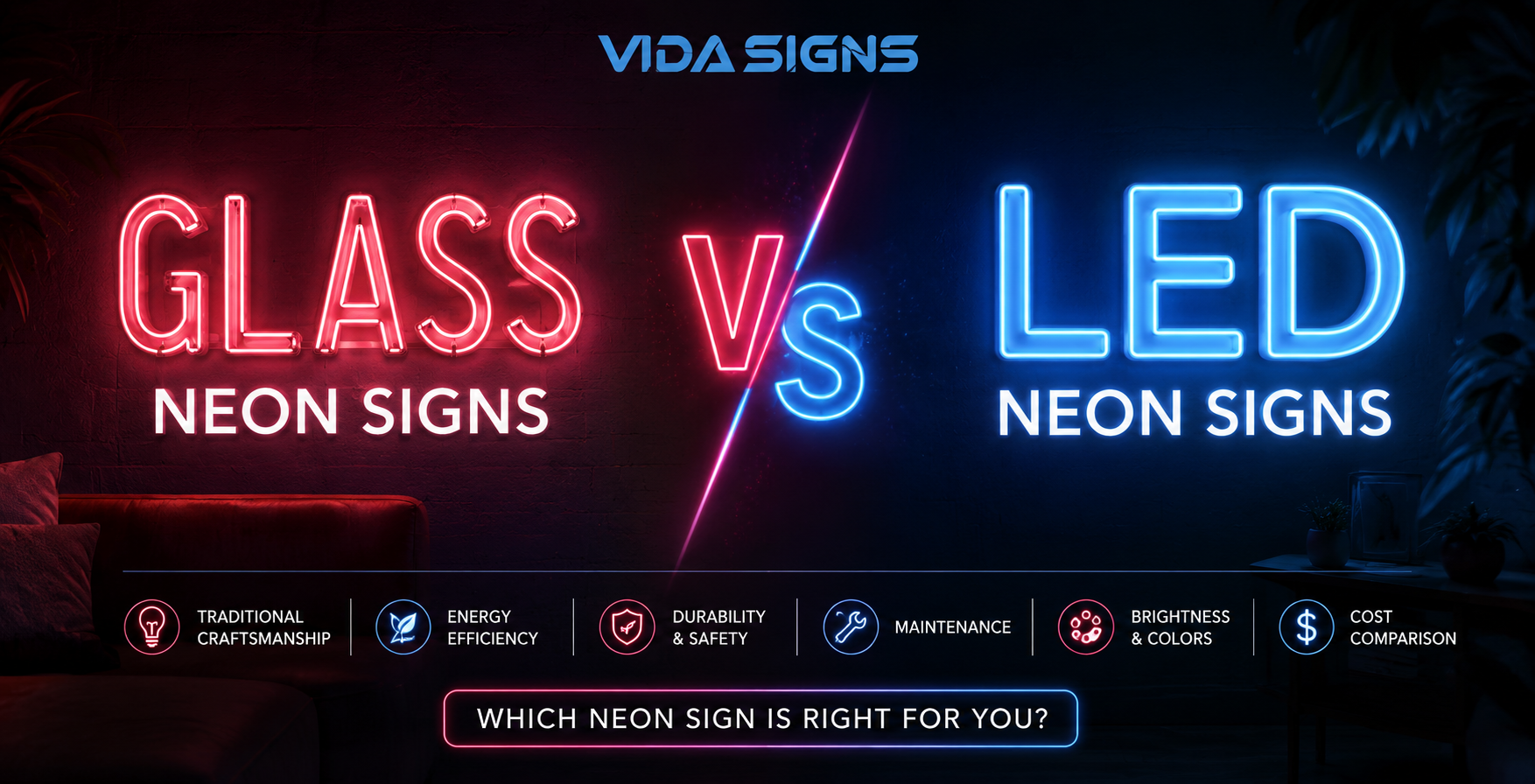
Glass Neon vs LED Neon Signs
02 JunTake a walk through any busy street in New York, and you’ll still surely spot a neon sign. A small taco shop glowing late at night, a retro barber shop sign, a cocktail bar in Brooklyn, or even custom lighting inside modern apartments, neon signs still grab attention in a way regular signs usually don’t.
But buyers today have two very different choices: traditional glass neon and modern LED neon. At first glance, they may look similar. In reality, though, they work differently and fit different types of spaces.
This blog provides a detailed comparison of glass neon vs. LED neon signs to help buyers determine which type of sign is best for their space.
What Are Glass Neon Signs?
A traditional glass neon sign is made using real glass tubes filled with neon or argon gas. The tubes are heated, bent by hand, and shaped into letters, logos, or custom artwork. Once connected to power, the gas inside the tubes creates that classic neon glow people instantly recognize.
This style of signage became popular across the United States decades ago. Even today, cities like New York still have famous neon storefronts lighting up restaurants, bars, theaters, and music venues.
Part of the appeal is the atmosphere. A real glass neon sign has a warmer, softer glow than modern lighting. It feels vintage. A little imperfect in a good way.
Some restaurant owners still prefer traditional neon because it creates a certain mood you can’t fully copy with LED.
At the same time, glass neon does come with a few drawbacks. The tubing is fragile, repairs can get expensive, and the signs usually use more electricity.
What Are LED Neon Signs?
An LED neon sign is the newer version of neon-style lighting. Instead of gas-filled glass tubes, LED neon signs use flexible LED strips wrapped in silicone or PVC to create a similar effect.
Over the last several years, LED neon has become extremely popular in the U.S. market. You’ll see LED signs inside gyms, cafés, retail stores, salons, apartments, wedding venues, and even home offices.
One reason for the popularity is convenience. An LED neon sign is usually lighter, safer, easier to install, and less expensive to maintain over the long term.
Many businesses now invest in custom LED neon signs because they can create almost any design they want without worrying about fragile materials or complicated maintenance.
And honestly, for many business owners, that practicality matters more than having “real” neon.
Glass Neon vs LED Neon Signs: Key Differences
When people compare glass neon vs LED neon signs, they usually focus on the glow first. But after installation, the real differences start to show up in maintenance, power bills, durability, and lifespan.
Appearance & Visual Effect
This is probably the most debated part of the whole conversation. Traditional neon has a very recognizable look. The glow feels softer and more natural, especially at night. Some people love the slightly imperfect vintage feel, because it reminds them of classic American diners and nightlife districts. A glass neon sign tends to create more atmosphere than brightness.
LED neon looks cleaner and sharper. The lighting is more uniform, and colors often appear stronger. Modern businesses usually prefer this look because it feels fresh and polished.
Neither option is automatically better. It honestly depends on the vibe you want. If you’re opening a retro-style cocktail bar, traditional neon might fit perfectly. If you’re designing a trendy coffee shop or sneaker store, LED probably makes more sense visually.
Which One Looks Brighter?
In most situations, LED signs appear brighter than traditional neon. That’s especially true during daytime hours or inside brightly lit commercial spaces. LED lighting spreads evenly and remains highly visible without consuming a large amount of electricity.
Traditional neon still looks amazing after dark, though. Some people actually prefer the softer glow because it feels more authentic and less harsh.
Energy Efficiency
Traditional neon signs require more electricity because they use high-voltage transformers to light the gas inside the tubes.
LED signs use much less power overall. If your sign stays on all day, as it does in many retail stores and restaurants, the savings can add up over time. That’s one reason newer businesses often lean toward LED from the beginning.
When discussing glass neon vs LED neon signs, energy efficiency is one of the biggest reasons people switch to LED.
Durability & Lifespan
Glass neon looks beautiful, but it definitely needs more care. Since the tubes are made from glass, they can crack during transportation, installation, or accidental impact. Even moving the sign from one location to another requires caution.
An LED neon sign is more durable because its materials are flexible rather than fragile. LED signs usually handle vibration, movement, and daily wear much better.
For busy commercial environments, LED tends to be the safer long-term investment.
Safety Comparison
Traditional neon signs use higher voltage and glass tubing. They’re generally safe when installed correctly, but damaged tubes can become a problem.
LED signs run on low voltage and don’t involve fragile glass. They also stay cooler during operation. That’s one reason LED signs are now common in homes, event venues, and many businesses.
Installation & Maintenance
Installing a traditional glass neon sign usually takes more effort because the sign is heavier and more delicate. If a section breaks, repairs normally need to be handled by someone experienced with neon tubing. Depending on the damage, repairs can become expensive.
LED signs are much easier to work with overall. They’re lightweight, simple to mount, and usually require very little maintenance after installation.
A lot depends on the location, of course. A sign inside a quiet office may never have issues either way. But for high-traffic businesses, LED is often easier to manage long-term.
Customization Options
Customization matters more now than it did years ago. Businesses want logos, slogans, branded walls, and social-media-friendly interiors that customers actually remember. LED technology makes that process easier because it’s flexible and available in a huge range of colors and styles.
That’s one reason companies that offer nyc neon signs often recommend LED for modern branding projects.
Glass neon can be customized too, but the process takes more time and usually costs more.
Which Option Costs More?
Traditional glass neon signs almost always cost more upfront. Part of the cost comes from craftsmanship. Each tube is heated and bent by hand, which takes experience and time. Repairs and maintenance can also increase long-term expenses.
LED signs are usually cheaper to produce and cheaper to operate. For startups or small businesses trying to control expenses, LED often feels like the safer financial decision.
Still, some business owners willingly pay extra for real neon because they love the authenticity of it.
Environmental Impact
LED signs are generally considered more environmentally friendly because they use less electricity and last longer.
Traditional neon isn’t necessarily bad, but it does require more power and specialized materials.
A lot of newer businesses now focus more on energy-efficient signage solutions than they did ten years ago. That shift alone has pushed LED neon into the mainstream.
Pros and Cons of Glass Neon Signs
Advantages of Glass Neon
- Authentic vintage appearance
- Warm glow with character
- Handcrafted and artistic feel
- Perfect for retro storefronts and bars
Traditional neon still has a loyal following for a reason. Some people simply love the real thing.
Disadvantages of Glass Neon
- Fragile glass tubing
- More expensive repairs
- Higher electricity usage
- Heavier installation
- Usually costs more overall
Pros and Cons of LED Neon Signs
Advantages of LED Neon
- Energy-efficient
- Lightweight and durable
- Easier installation
- Safer low-voltage system
- Highly customizable
- Lower maintenance needs
For many modern businesses, LED is just easier to deal with day-to-day.
Disadvantages of LED Neon
- Doesn’t fully recreate the authentic neon glow
- Some cheaper LED products can fade over time
- Less nostalgic compared to traditional neon
Which is Better: Glass Neon or LED Neon?
This really depends on what matters most to you.
If your goal is to create a vintage atmosphere with classic American signage vibes, traditional neon has that special feel. Restaurants, bars, music venues, and retro businesses often prefer that authentic glow.
But for most modern storefronts, LED makes more practical sense. It’s easier to install, cheaper to run, safer, and more durable in the long term.
A professional sign company in NYC can usually help you figure out which option works best for your space, budget, and branding goals.
In the end, most people already know which style they like the moment they see it.
How to Choose the Right Neon Sign
Before buying a sign, it helps to think about how the sign will actually be used.
Ask yourself:
- Will the sign stay on for long hours?
- Is it going indoors or outdoors?
- Do you want a modern or vintage look?
- How important is energy efficiency?
- What’s your maintenance budget like?
If you care most about nostalgia and atmosphere, a glass neon sign may be worth the extra effort and cost.
If you want something lightweight, efficient, and low-maintenance, LED is probably the smarter choice.
Many businesses searching for custom neon signs in NYC eventually choose LED simply because it fits modern commercial spaces better.
Bottom Line
When comparing glass neon vs. LED neon signs, there isn’t a single universal winner.
Traditional glass neon still delivers an iconic, timeless look. It has a personality that LED still can’t completely replicate.
LED neon, though, wins in practicality. It’s more durable, energy-efficient, customizable, and easier to maintain over time. That’s why so many modern businesses now choose LED for everyday signage.
Looking for Signage Options for your Business?
Whether you want a custom neon sign or basic LED signage, Vida Signs in NYC is here to fulfil all your business signage needs. Our team can design, manufacture, and install a variety of signs for you tailored to your budget. Call (212)-388-9388 today to enquire how we can help you.
FAQs
What is the difference between glass neon and LED neon signs?
Glass neon signs use gas-filled glass tubes, while LED neon signs use flexible LED lighting strips that create a similar glowing effect.
Are LED neon signs brighter than glass neon?
Usually, yes. LED signs tend to appear brighter and more visible during the daytime.
Which neon sign lasts longer?
LED neon signs generally last longer because they’re more durable and less likely to break.
Are LED neon signs cheaper to run?
Yes. LED signs use less electricity, so operating costs are normally lower over time.
Can LED neon signs be used outdoors?
Yes, many LED signs are designed for outdoor use when properly weatherproofed.
Do glass neon signs break easily?
They can if handled roughly. Since the tubing is made from glass, traditional neon signs need extra care during installation and transportation.
Which is safer: glass neon or LED neon?
LED neon is usually considered safer because it runs on lower voltage and doesn’t use fragile glass tubing.
Are LED neon signs customizable?
Absolutely. LED signs can be customized into different fonts, logos, shapes, and colors.
Why are glass neon signs more expensive?
Most of the higher cost comes from the handcrafted work involved in bending and shaping the glass tubing.
Which is better for business signage?
For most modern businesses, LED neon is usually the more practical option because it’s energy-efficient, durable, and easier to maintain.
