

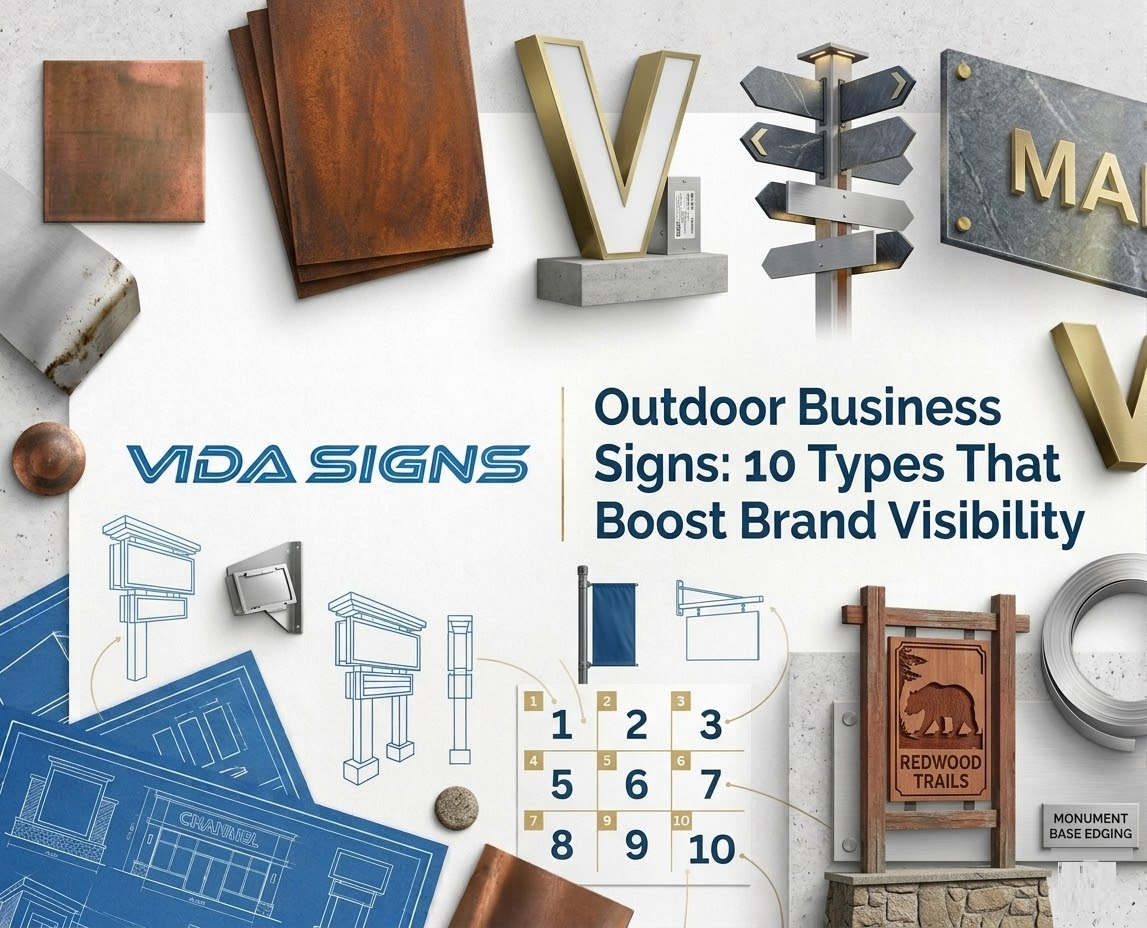
Outdoor Business Signs: 10 Types That Boost Brand Visibility
25 MarWalk through any busy street and something interesting happens. Your attention drifts toward storefronts without you even trying.
- A bright sign above a café.
- A tall display outside a retail store.
- A simple set of raised letters on a quiet office building.
These visual cues guide people long before they step inside.
That quiet influence is the real power of outdoor business signs. They introduce a brand, signal professionalism, and often become the first moment of contact between a business and someone passing by.
This article examines why outdoor business signs matter, the factors businesses should consider before installing one, and 10 sign styles that consistently enhance brand visibility.
Why Outdoor Business Signs Are Important
People often decide whether to enter a business within seconds. A well-designed sign creates familiarity before someone even reads it fully.
Good outdoor business signs build consistency, with the colors, fonts, and shapes reinforcing their brand identity. When people see the same visual cues repeatedly, recognition grows naturally.
There is also the simple matter of visibility. In crowded streets, commercial areas, and retail districts, signage helps a business stand out among many competing storefronts. Many companies experiment with different types of business signage until they find the style that best matches their brand and location.
When done well, commercial outdoor signs become part of the daily visual rhythm of a neighborhood.
Key Factors to Consider When Choosing Outdoor Business Signs
Selecting signage involves more than choosing a style. Several practical factors influence how effective a sign will be once installed.
Location and Visibility
The surroundings shape everything. Traffic patterns, building height, and nearby structures all affect visibility.
A sign positioned along a busy street may need stronger contrast or lighting. A sign in a quieter pedestrian area can rely more on design and detail. Businesses often study nearby commercial outdoor signs before deciding what works best in that environment.
Size and Placement
Scale plays a surprisingly large role in perception. A sign that feels balanced on a building draws attention without looking overwhelming.
Placement carries just as much weight: signs set too high slip past pedestrians, while those placed too low end up hidden behind parked cars or landscaping.
Materials and Durability
Outdoor conditions are not gentle on signage. Rain, sunlight, wind, and temperature shifts gradually wear down materials.
Metal, acrylic, treated wood, and weather-resistant composites remain common choices. Businesses considering long-term investment often compare several types of business signage before settling on materials that balance style and durability.
Lighting and Illumination
Lighting changes everything once evening arrives.
Some signs glow softly from behind, others rely on internal lighting or LEDs for nighttime visibility, yet the real aim is a clear, readable display rather than brightness alone. When lighting is thoughtfully integrated, outdoor business signs continue to work even after streetlights turn on.
10 Types of Outdoor Business Signs That Boost Brand Visibility
Many businesses explore different types of business signage before choosing the one that fits their space and brand identity. Each style offers a slightly different visual presence.
Channel Letter Signs
Channel letters are individually crafted letters mounted on a building façade. Each letter often contains internal lighting, giving the sign a clean glow at night.
Retail chains and restaurants use this style frequently because the lettering stands out clearly from a distance.
Monument Signs
Monument signs sit low to the ground near entrances. They often appear at office parks, schools, medical facilities, and residential communities.
Their solid base creates a permanent look that communicates stability.
Pylon Signs
Pylon signs rise high above the ground and remain visible from long distances. Gas stations, shopping centers, and roadside businesses rely heavily on them.
Drivers often spot these signs long before reaching the entrance.
LED Signs
LED displays allow businesses to change messages or promotions without replacing the entire sign. Restaurants, theaters, and service businesses often use them to display announcements or daily offers.
Blade Signs
Blade signs extend outward from a building wall, positioned perpendicular to the street. Pedestrians walking along a sidewalk can easily spot them.
Boutiques and cafés often use blade signs, especially in walkable commercial districts.
Awning Signs
Awnings combine shade and branding into a single structure. The business name or logo is printed directly on the fabric or structure above the entrance.
This style creates a welcoming visual cue while also serving a practical purpose.
Window Graphics
Window graphics turn storefront glass into a branding space. Vinyl lettering, logos, and large graphics can communicate services or promotions.
While technically attached to the building, they still contribute to the overall system of outdoor signage for businesses.
Pole Signs
Pole signs resemble pylon signs yet usually support a single business name or logo. They stand on a tall pole rather than a large base.
Many roadside businesses rely on them when storefront visibility is limited.
Dimensional Letter Signs
Dimensional letters add depth to a sign. Instead of flat printing, the letters project outward from the wall. This small detail often creates a stronger visual impression, especially when natural light casts shadows around the lettering.
In busy urban areas where signs in NYC compete for attention on nearly every block, thoughtful design becomes even more valuable.
Lightbox Signs
Lightbox signs use an illuminated panel behind printed graphics. The entire sign glows evenly, making text and logos easy to read at night.
Retail stores, pharmacies, and convenience shops often install them above storefront entrances.
How to Design an Effective Outdoor Business Sign
Design begins with clarity. People walking or driving past a location rarely pause to study a sign for long. Short text works best. A name, a recognizable logo, and simple typography communicate faster than detailed messaging.
Color contrast also plays a role. Dark lettering against a lighter background improves readability from a distance. Many businesses consult experienced designers or work with signage companies in NYC when planning new signage. Local professionals often understand zoning rules, installation practices, and visibility considerations across different districts.
Tips to Maximize the Impact of Outdoor Business Signs
A sign performs better when a few practical ideas are kept in mind.
- Keep text minimal: A passerby should understand the message in seconds.
- Use lighting strategically: Night visibility often doubles the exposure a sign receives.
- Maintain the sign regularly: Dirt, fading colors, or broken lighting can weaken the impression a business creates.
Most businesses also review how their sign appears from different angles. Walking across the street or approaching from a distance can reveal small adjustments that make a big difference.
Strong outdoor business signs rarely happen by accident; a series of small design decisions gradually builds a clear, memorable presence.
Why Professional Signage Matters
Sign installation involves more than mounting letters on a wall.
Local building codes, structural safety, electrical components, and weather resistance all influence how a sign performs over time. Professional fabricators understand these technical details and often guide businesses through the permitting and installation process.
Many companies also explore multiple types of business signage before settling on the final design. Professionals help narrow those choices based on location, brand identity, and long-term durability.
A sign that looks simple from the outside often reflects careful planning behind the scenes.
Conclusion
A well-designed sign quietly shapes how people perceive a business. It introduces the brand, guides visitors to the entrance, and reinforces recognition every time someone walks or drives past.
From illuminated channel letters to monument displays and blade signs, different styles serve different environments. The key lies in choosing signage that fits the location, communicates clearly, and remains visible throughout the day and night.
Businesses that treat signage as a long-term investment often see the strongest results from their outdoor business signs.
Ready to Elevate Your Business Visibility?
Your sign often creates the first impression customers experience.
At Vida Signs, we design and install high-quality signage tailored to your location and brand identity. From storefront lettering to large exterior displays, our team guides businesses through design, fabrication, and installation with attention to detail at every step. Speak with our specialist today and explore signage built to stand out.
Call us at (212) 388 -9388 to get started.
FAQs (Frequently Asked Questions)
What is the most effective outdoor business sign?
The most effective sign depends on location and visibility needs. Channel letter signs and illuminated lightbox signs often perform well for storefronts since they remain visible day and night.
How long do outdoor business signs last?
Many signs last between 5 and 10 years or longer. Lifespan varies based on materials, weather exposure, and maintenance.
What materials are best for outdoor signs?
Common materials include aluminum, acrylic, stainless steel, and weather-treated wood. These materials resist outdoor conditions and maintain appearance over time.
How large should an outdoor business sign be?
The size should match the viewing distance and building scale. Signs meant for drivers usually need larger lettering than signs designed for pedestrian traffic.
Are illuminated signs better for businesses?
Illuminated signs extend visibility into the evening and early morning hours. Many businesses see improved recognition with lighting.
Do outdoor signs require maintenance?
Yes. Cleaning, lighting checks, and occasional repairs help keep signs clear and readable for years.
